Online Conference 5-11 July 2021
February 2–7, 2027
Vienna, Austria
Parallel Papers Session
Day and time: to be anounced
Paper code: PP27L
Presenter: Michael Hauger
Moderator: to be announced
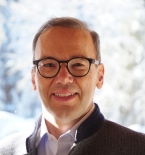
Michael Hauger
Dipl.-Ing. Michael Hauger (M.S.) is an executive and team coach who supports his clients in managing and shaping change, and in making their teamwork more effective.
He combines extensive experience in complex organisations undergoing change (private equity, M&A, restructuring) with a comprehensive understanding of business and leadership experience
gained over more than 25 years in senior and executive roles in corporate offices, public affairs and communications at international companies and organisations.
He graduated with distinction with an Executive Master in Change (EMC) from INSEAD in Fontainebleau (France) and holds a degree in Aerospace Engineering (University of Stuttgart). Early in
his career, he also obtained the Controller Diploma from the Controller Academy in Gauting. In 2023, he completed the INSEAD In-Board Programme for non-executive directors. He is an
ICF-certified Integral Development Coach and Advanced Team Effectiveness Coach. In 2022, he founded the consultancy firm AURES CORDIS, based in Ehrwald (Tyrol, Austria). In 2026, he began a
PhD in Systems Psychodynamics at the National Institute of Organisation Dynamics Australia (NIODA). His research focuses on the effectiveness of small teams.
“For many years, our ensemble rode a huge wave of success. It felt as though there was nothing we couldn’t achieve, nothing that was impossible. Then, suddenly, the problems arose: trivial details escalated to disproportionate conflicts. Harmony and intuitive communication gave way to a state of constant underlying tension. Two members developed health problems. There were changes to the ensemble’s line-up. And then came the abrupt end. We simply no longer understood one another; mutual trust was gone.”
This experience of a member of a chambermusic ensemble that was highly successful worldwide for two decades is similar to many other high-performance teams. Their work is based on shared responsibility and demands a high degree of trust, commitment and reliability. And suddenly they are no more masters in their own house. Communication problems are usually blamed for this, as are often changes in external circumstances.
Organisations resort to team-building measures, communication training, or performance assessments. Such measures operate at the level of the conscious mind. But just putting what is cognitively accessible into words rarely leads to the desired, sustainable change in a team’s situation. Unconscious patterns of the team and its members – and where these originate – remain unaddressed. And so, hidden and unconsciously, the self-regulation taking place within team members continues to draw on behaviours that proved safe in the past but now obstruct the team’s progress. To use Bion’s terminology: ‘Work Groups’ become ‘Basic Assumption Groups’. The teams remain off-task and dysfunctional.
Unconscious patterns have their origins in one’s own past experiences as well as in the experiences of previous generations within their socio-cultural environment. In my work with chamber music ensembles, I use genograms to help ensemble members become aware of such unconscious patterns, which stem from these hidden, transgenerationally transmitted family experiences. I use this method, borrowed from family therapy, to reveal, within a team context, unconscious patterns of behaviour, relationships, anxieties, expectations, perceptions and experiences, as well as formative imprints and valencies associated with assuming certain roles. Only what becomes visible can be understood and accepted.
In my conference paper, I will use a concrete example to demonstrate my approach. The basis for the team work is individual genogram work with the team members. They explore which familial and socio-cultural influences have shaped them across generations. For many, this is the first time they have engaged with their family history and their biographical roots. This work regularly opens up new perspectives. Unconscious patterns become visible and take on meaning, first at an individual level, and are then brought to team level.
Team members are invited to share their individual insights within the team. In doing so, they learn and discover how individual family and socio-cultural influences shape collaboration within the team. They develop a shared understanding of the gifts each member brings to the team and the collective heritage that shapes the team. The team gains insight into a social unconscious, which has emerged through the interaction of the team members’ unconscious minds without conscious intervention, and yet is more than the sum of what the team members bring to the table.
This understanding gives team members the ability to perceive and accept individual behaviours and expectations with curiosity rather than judgment. This creates a space in which a team can again become an effective work group, even in stressful situations.
My session aims at providing consultants and coaches with a powerful method to bring hidden individual imprints to the surface, which members bring into their team. It provides an applicable framework, which has been develop over several years of work with chamber music ensembles and other high performance teams. They will gain a deeper sense for the power of individual transgenerational and sociocultural imprints on work groups.


 Translate