Online Conference 5-11 July 2021
by Elisabeth Prchla, Co-Conference Chair
Vienna around 1900 was a city of extraordinary creativity and deep contradictions. Behind its imperial grandeur lay tensions around belonging, authority, sexuality and identity.
These books offer different ways into that world and into questions of illusion, loss and change that resonate with our conference.
Carl E Schorske — Fin-de-Siècle Vienna
Nonfiction · Cultural and intellectual history · Originally written in English
Full title: Fin-de-Siècle Vienna: Politics and Culture. The strongest historical starting point. Schorske connects Vienna’s political and social fractures with developments in
art and thought. Substantial reading for those interested in cultural creativity and a changing social order.
Book details
Stefan Zweig — The World of Yesterday
Nonfiction · Memoir · Available in English
German title: Die Welt von Gestern. An evocative account of European cultural life and the destruction of a world once experienced as secure. Particularly resonant with mourning, belonging
and the loss of certainty. A personal recollection shaped by exile and hindsight. Anthea Bell’s English translation is published by Pushkin Press.
Book details
Arthur Schnitzler — Lieutenant Gustl
Fiction · Short novella · Available in English
German title: Leutnant Gustl. A young officer’s threatened honour becomes an unfolding inner crisis. The strongest short recommendation for ISPSO readers: it invites reflection on
shame, status, masculinity and an identity organised around institutional expectations.
Book details
Joseph Roth — The Radetzky March
Fiction · Novel · Available in English
German title: Radetzkymarsch. A portrait of the decline of the Austro-Hungarian Empire. Particularly rewarding for readers interested in inherited loyalties, institutional attachment and the
difficulty of recognising that a familiar order is disappearing. Its scope extends beyond Vienna.
Book details
Brigitte Hamann — Hitler’s Vienna
Nonfiction · History and biography · Available in English
Full English title: Hitler’s Vienna: A Dictator’s Apprenticeship. An essential counterweight to nostalgic images of Vienna: a study of the social and political environment of
Hitler’s Viennese years, including nationalism, antisemitism and resentment beneath the city’s cultural brilliance.
Book details
Edmund de Waal — The Hare with Amber Eyes
Nonfiction · Family history and memoir · Originally written in English · Additional recommendation
Traces a collection of small Japanese objects through the Ephrussi family’s history, including Vienna and Nazi dispossession. A compelling addition for thinking about memory,
inheritance, displacement and what survives loss.
Book details
Arthur Schnitzler — Dream Story
Fiction · Novella · Available in English · Additional recommendation
German title: Traumnovelle. An especially fitting literary companion to Freud: desire, fantasy and uncertainty disturb the apparent security of a marriage. A good alternative to Lieutenant
Gustl for readers interested in intimate relationships.
Book details
Brigitte Hamann — The Reluctant Empress
Nonfiction · Biography · Available in English
Full title: The Reluctant Empress: A Biography of Empress Elisabeth of Austria. The preferred Elisabeth biography for this selection, particularly through the lens of tensions between person,
public image and prescribed role.
Book details
Brigitte Hamann — Rudolf Crown Prince and Rebel
Nonfiction · Biography · Available in English
For readers drawn to authority, succession and conflict within an imperial family. Hamann presents Rudolf as a liberal intellectual in opposition to his father and the establishment. The
English edition translates her revised biography Kronprinz Rudolf: Ein Leben.
Book details
Heimito von Doderer — The Strudlhof Steps
Fiction · Novel · Available in English
German title: Die Strudlhofstiege. A richly populated portrait of Vienna before and after the First World War. An immersive literary undertaking: Vincent Kling’s English translation
runs to 864 pages.
Book details
Eric R Kandel — The Age of Insight
Nonfiction · Art psychology and neuroscience · Originally written in English · Additional recommendation
Connects Vienna 1900, Freud, Schnitzler and artists including Klimt, Schiele and Kokoschka. Best for readers interested in art and mind; its perspective extends beyond psychoanalysis into
neuroscience.
Book details
Robert Musil — The Man Without Qualities
Fiction · Unfinished novel · Available in English
German title: Der Mann ohne Eigenschaften. A vast, ironic novel of ideas set in Vienna on the eve of the First World War, exploring identity, possibility and an imperial society absorbed in
its own grand projects. With a wink: nearly impossible to read, yet a source of considerable pride for those who have read it—or at least say they have. Its unfinished state adds a
fitting resonance to our theme of incompleteness.
Book details
Philipp Blom editor — Wien Aufbruch um 1900
Nonfiction · Illustrated cultural and social history · German edition · English translation not verified
Included as a nod to our keynote speaker, Philipp Blom. Published as Wien. Aufbruch um 1900, this richly illustrated collection brings together perspectives on Vienna’s artistic and
social transformations around the turn of the century. It looks beyond the celebrated names and splendid façades to women’s contributions, intellectual networks and the
contrasting realities of city life. An invitation to explore the world that will form part of our conversations in Vienna.
Book details
Edition note: “Available in English” confirms that an English edition exists, not that every edition is currently in print. The Blom volume is listed in German; an English translation could not be verified. Links lead to book or edition information. Updated 30 October 2026.
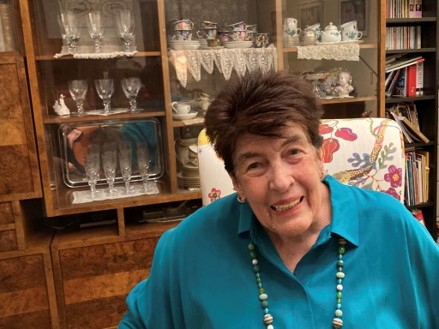
My mother, Felicitas Prchla, née Kou?imský, was born in 1932 in what was then Czechoslovakia. Most books in this selection were read and recommended by her. In this photograph, she sits in front of a cabinet that accompanied her family on two escapes to Vienna.
In 1942, her mother, Lily Kou?imský, née Blumenfeld, was deported to the Theresienstadt ghetto and concentration camp. With the family no longer safe on their property in Bohemia, her father took Felicitas and her brother to Vienna.
After the war, they returned to Prague to search for Lily—and found her. They could not safely return to their home in Bohemia, where being a German-speaking family put their lives at risk. They began to rebuild their lives in Prague, but in 1948, following the communist takeover, they fled once more to Vienna.
The cabinet is still with her today.
- Elizabeth Prchla


 Translate