Online Conference 5-11 July 2021
February 2–7, 2027
Vienna, Austria
Professional Development Workshop
Tuesday 2 February afternoon & Wednesday 3 February morning
Full day workshop (in 2 half days)
Code: PDW 8
Presenters: Richard Morgan-Jones, Dragana Vranjes, Iwona Soltysinska
and András Gelei.
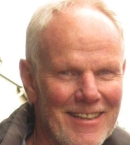
Richard Morgan-Jones
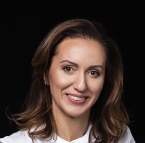
Dragana Vranjes
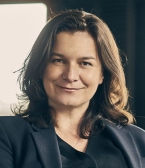
Iwona Soltysinska
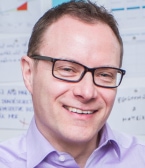
András Gelei
Richard is an Organisational and Group Relations Consultant and a Psychoanalytical Psychotherapist. He has worked internationally in these roles, directing conferences and workshops and working clinically. He is a distinguished member of ISPSO and a member of Opus and a Senior Member of the British Psychotherapy Foundation where he has been a training therapist and supervisor. He is a founding member of CEEGRA (Central and Eastern European Group Relations Associates). He is author of "The Body of the Organisation and its Health".
What does it mean to be European today? For sure those of us who carry some kind of European identity we are not “masters in our own house”. Rather in such ambitions are we tempted into excluding nationalism or a restricted internationalism.
We invite representatives with ties to Europe across the geographical region from the Russian Urals to the Atlantic and from Greenland and the Arctic to the Mediterranean. We do not imply that European-ness is a project exclusive to the European Union, although it carries overlaps.
At a time when Europe is being challenged to redefine its place in a rapidly changing world, this question is becoming both more urgent and more difficult to answer.
Huge challenges confront Europeans with conflicts around warfare, climate change, ideology, past trauma and future challenges.
This PDW offers a space to explore how our different histories, cultures, migrations and experiences shape our sense of being European—and how we relate across emerging differences and common ground when these differences are brought into dialogue.
This PDW is designed to provide a reflective and observational space. In this space we will explore how to make use of links between the personal and the collective in order to shape engagements and formulate hypotheses.
Psychoanalytically, it is inspired by the AM theme where the challenge to the hubris of Europe is that it has to come to terms with not “being master in its own house”.
Current Context
European Dynamics between nations and peoples have been both tense and yet creative across the past 100 years and more. This has created a heritage that deserves wider and deeper understanding to find positions from which to engage in Europe wide organisational projects.
Right now, Europeans are being asked to find new ways of bridging differences to commit to the common cause of working within a European identity across many fields. We believe this demands that we look below the surface to explore what makes us European.
Europe and Europeans have both shared and different histories worth exploring through the experience of members from across the region. Meanwhile geo-politically this present moment is calling for new identifications, new roles and new leadership for Europe and Europeans in the wider world. These dynamics of huge transition deserve our study.
The purpose of this event is to create a series of dialogues across cultures and nations represented by members by studying how members came to belong to groups in family, schooling, work and nation the aim is to develop a new sense of our being Europeans.
Methodology: The methodology is based on developing and applying the Trilogy Matrix through which connections can be made from 3 distinct perspectives held apart, studied and then linked.
Aims and Learning Objectives
By the end of the PDW, members will have had opportunities to:
This workshop has been inspired by the work of Central and Eastern Group Relations Associates (CEEGRA), founded in 2025 to develop group relations events that carried a focus on learning from experience in that region. This workshop is designed to develop the application of group relations understandings to European culture and to explore the way East-West and North-South cultural experience inter-relate across regions.
This shared venture draws from and seeks to develop group relations approaches pioneered in central Europe and across east and West Germany. It has links to other centres of group relations across parts of Germany and Europe.
Workshop Staff
The workshop is designed by Richard Morgan-Jones (UK) along with Iwona Soltysinska (Poland), Dragana Vranjes (Serbia), and András Gelei (Hungary) who will be workshop group hosts.
The PDW is a development of a collaboration between the Organisation for Promoting the Understanding of Society (OPUS) and Central and Eastern European Group Relations Associates (CEEGRA).


 Translate