Online Conference 5-11 July 2021
February 2–7, 2027
Vienna, Austria
Professional Development Workshop
Wednesday 3 February
Morning, half-day workshop
Code: PDW 12
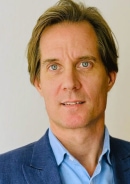
Presenter: Moritz Senarclens de Grancy
Moritz Senarclens
de Grancy
Moritz Senarclens de Grancy works in Berlin as a psychoanalyst, supervisor, couples therapist, and consultant. He earned his doctorate at the
Seminar for Cultural Studies at Humboldt University Berlin with a study on Freud's epistemics, supported by a doctoral fellowship from the Dr. Lotte Köhler Foundation.
His work brings together clinical psychoanalysis and system-psychodynamically oriented consulting, with a particular interest in the places where institutional
mandates, professional roles, and unconscious dynamics intersect. He works as a director and staff member in group relations conferences and has many years of experience consulting to and
supervising psychoanalytic and psychotherapeutic training institutes, social-sector organizations, and organisations in the healthcare field. He also teaches a practical seminar at the
Evangelisches Zentralinstitut für Familienberatung (EZI) in Berlin on psychoanalytic supervision in relationship-intensive professions, working with the tension between closeness and
professional function.
His publications include Der heißeste Wunsch der Menschheit (2021), Einführung in die Arbeit mit der Sozialen Traummatrix (2023, with Ullrich
Beumer), and Arbeitsplätze sind Beziehungsplätze (2025). His latest book, Psychoanalyse und Management: Mehr Freud für Führungskräfte (2026), is forthcoming with
Vandenhoeck & Ruprecht.
Moritz has been a member of the ISPSO Board of Directors since 2024, where he is responsible for events and the community blog. He chaired the ISPSO Annual
Meeting 2021 in Berlin and currently serves as a staff member at the ISPSO’s Vienna AM27.
Psychoanalysis is often mistaken for a slow, private affair – a matter of couches and childhood. This workshop starts from a different premise: that what Freud discovered is a way of thinking, and that this thinking is eminently practical for anyone who leads or consults.
It is fitting to explore this in Vienna, where psychoanalysis began. Freud, trained as a neurologist, made a discovery through listening to his patients: that speech reveals more than the speaker knows. In what people say – in their hesitations, slips, repetitions, and associations – an unconscious wish makes itself heard, along with the defenses that work against it. Free association was Freud's method for reaching what ordinary, purposeful thinking keeps out of view.
The workshop introduces these origins directly: language and speech as the material of the unconscious; the unconscious wish; defense; free association. The aim is to show what these concepts were always for. Freud's central concern was the ability of thinking – how it becomes possible, how it fails, and how it can be restored.
This is what makes psychoanalysis useful for leadership and consulting. It is a mode of structural and functional thinking. It does not catalogue personalities or apply labels; it asks how a system is organized, what position each element occupies, and what a given dynamic accomplishes. With this way of thinking, a situation that first appears confusing or intractable – a stuck team, a repeated conflict, a decision no one will own – can be made available to thought remarkably quickly. And what can be thought can be worked with.
The workshop is therefore an introduction to a pragmatic way of using psychoanalysis. Concepts are introduced only to be put to work on cases brought by participants. Working in the here-and-now of the group, we attend not only to the presented problem but to what the case evokes among us – treating our own responses as information about the system that cannot be seen from outside. Participants practice locating the position a client organization assigns them, and reflecting on it rather than enacting it.
Newcomers will gain a clear, usable grasp of the foundational ideas and how they apply to organizational work. Experienced participants will encounter a distinctive integration of Freudian, Lacanian, and systems-psychodynamic thinking, oriented throughout toward the recovery of thought where it has become blocked.
Participants will leave able to read organizational dynamics structurally, to use their own responses as a source of insight, and to move from confusion to a workable formulation – the grip that psychoanalysis offers on what would otherwise remain opaque.


 Translate